Choosing the right piano tutor is an important first step when you or your child is beginning a musical journey. With many options for piano classes in Singapore, it can be difficult to know which teacher, teaching style, or lesson format will be the best fit.
Whether you are looking for piano lessons in Singapore for a child, an adult beginner, or someone preparing for music examinations, asking the right questions before your first lesson can help you make a confident decision.
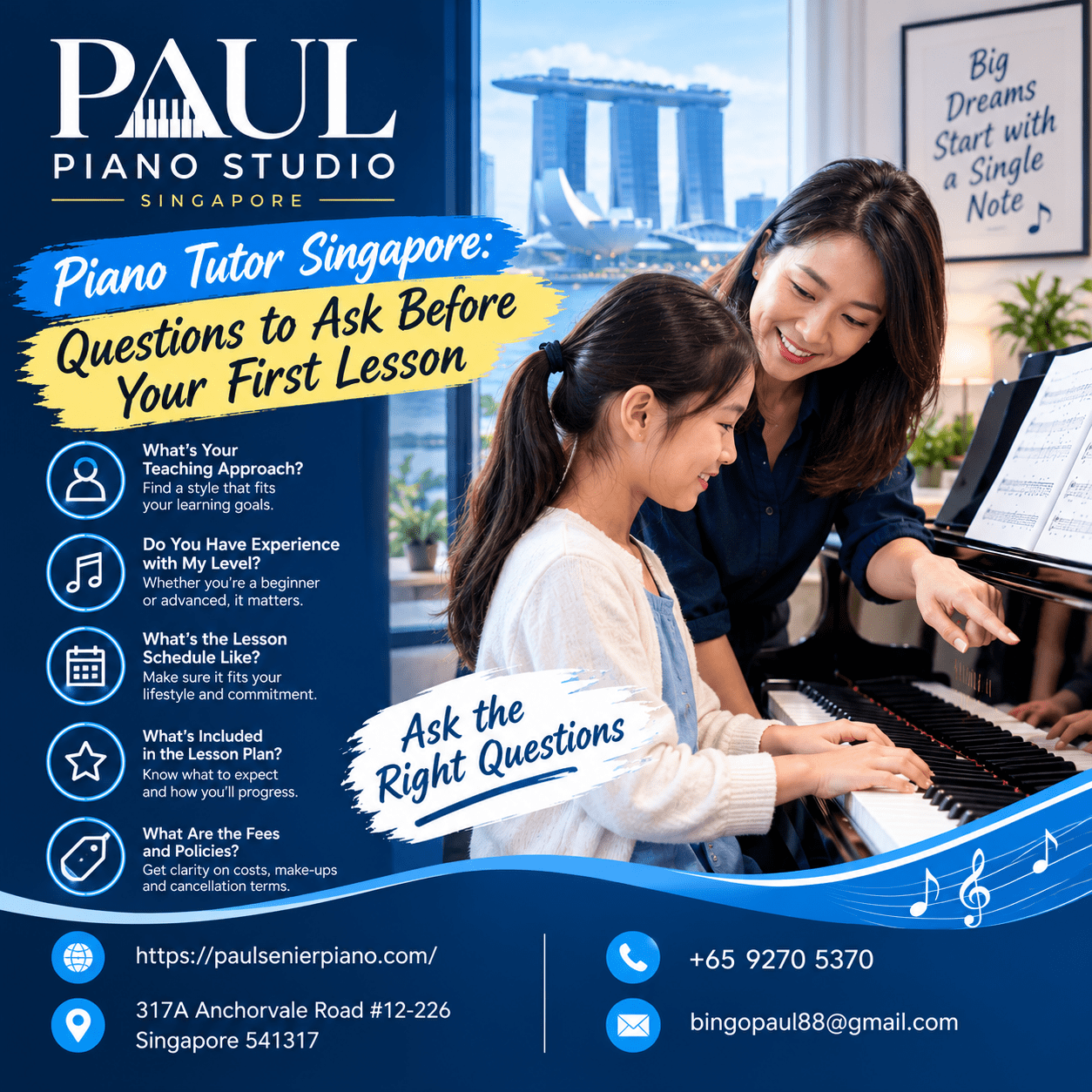
Here are the key questions to ask a piano tutor before signing up for lessons.
1. What Is Your Teaching Experience?
One of the first things to ask a prospective piano teacher is about their teaching experience.
A teacher may have excellent piano skills, but teaching requires a different set of abilities. An effective tutor should be able to explain musical concepts clearly, adapt lessons to different learning styles, and encourage students when they find something challenging.
Ask about:
- Years of piano teaching experience
- Experience teaching beginners
- Experience teaching children or adults
- Musical qualifications
- Experience preparing students for piano examinations
- Teaching approach and philosophy
If you are looking for piano lessons for starters in Singapore, choosing a teacher who regularly works with beginners can make the learning process more comfortable.
2. Do You Teach Complete Beginners?
Not every piano tutor follows the same approach with beginners.
Some teachers focus heavily on music theory and examinations, while others introduce students to practical playing, rhythm, technique, and songs from the beginning. Ask the tutor how they would structure the first few lessons for someone who has never played piano before.
A good beginner program should gradually introduce:
- Correct sitting posture
- Hand and finger position
- Basic notes
- Rhythm and timing
- Simple scales and exercises
- Reading basic music notation
- Beginner songs
- Practice techniques
For a beginner, the ability to build confidence is just as important as technical development.
3. What Is Your Teaching Style?
Every student learns differently. Some prefer a structured syllabus, while others enjoy a more flexible approach.
Ask your potential tutor how they balance technique, music theory, sight-reading, repertoire, and enjoyable playing. For children especially, an overly rigid teaching style can make lessons feel like a chore. At the same time, lessons that lack structure may not provide enough progress.
The ideal approach usually combines clear goals with enough flexibility to keep students motivated.
4. Do You Offer Private or Group Lessons?
When comparing piano classes in Singapore, find out whether the teacher offers private lessons, group classes, or both.
Private lessons provide one-to-one attention and allow the tutor to adapt the lesson to the student’s ability. Group lessons can offer social interaction and may be suitable for students who enjoy learning with others.
Your choice may depend on:
- Student’s age
- Learning objectives
- Budget
- Preferred learning environment
- Desired pace of learning
If personalised attention is important, a private piano tutor may be the better option.
5. Do You Offer Home Piano Lessons?
Convenience can make a major difference to consistency.
Some students prefer travelling to a piano studio in Singapore, while others find home piano lessons in Singapore more convenient. Home lessons can be particularly useful for busy families because they eliminate travel time. Students may also feel more relaxed learning in a familiar environment.
Before choosing home lessons, ask whether the teacher travels to your area and whether there are additional travel charges.
6. What Piano Syllabus Do You Follow?
If your goal involves examinations or formal musical development, ask which syllabus the tutor follows. Some students may work toward recognised piano examinations, while others simply want to learn for enjoyment.
If examinations are part of your plans, ask about:
- Examination boards
- Grade progression
- Theory requirements
- Practical examination preparation
- Typical practice expectations
However, examinations are not essential for every student. If your main objective is to play songs and develop a lifelong interest in music, your tutor should be able to create lessons around those goals.
7. How Much Practice Is Expected?
Practice between lessons is an important part of learning piano.
Ask the tutor how much practice a beginner should aim for each week. The answer may vary depending on the student’s age, ability, goals, and available time. Rather than focusing only on the number of minutes, ask how students should practise.
Effective practice may include:
- Reviewing previously learned material
- Working slowly on difficult sections
- Practising scales or technical exercises
- Improving rhythm and accuracy
- Playing complete pieces
- Reviewing corrections from the previous lesson
A good tutor should teach students how to practise effectively, not simply tell them to practise more.
8. How Do You Track Student Progress?
Progress tracking helps students understand whether they are improving.
Ask whether the tutor uses lesson notes, practice assignments, assessments, performance goals, or regular reviews. Parents may also want to know how they will receive feedback about their child’s progress.
At Paul Piano Studio, for example, students can benefit from a structured learning approach that focuses on developing musical skills progressively while keeping lessons engaging.
9. What Are the Lesson Fees and Policies?
Before your first lesson, make sure you understand the complete cost.
Ask about:
- Lesson fees
- Lesson duration
- Registration fees
- Trial lessons
- Materials or books
- Cancellation policies
- Make-up lessons
- Public holiday arrangements
- Payment schedules
Comparing prices alone is not enough. A cheaper lesson may not provide the teaching style, experience, or individual attention you need.
Instead, consider the overall value of the lessons.
10. Is There a Trial Lesson?
A trial lesson can be one of the best ways to determine whether a tutor is suitable.
During the trial, pay attention to how the teacher communicates and whether the student feels comfortable.
For children, observe whether the teacher is patient and encouraging. For adult beginners, consider whether the tutor listens to your goals and explains concepts clearly.
A good first lesson should leave you with a better understanding of what the learning journey will look like.
11. Can Lessons Be Personalised?
Students have different reasons for learning piano.
One student may want to prepare for examinations, another may want to play pop songs, while another may simply want a relaxing hobby.
Ask whether the tutor can adapt lessons according to your objectives.
A personalised approach can make piano lessons in Singapore more enjoyable because students can work toward goals that are meaningful to them.
12. What Should You Bring to the First Lesson?
Ask your tutor whether you need to bring anything.
For a first lesson, you may need:
- A notebook
- Existing music books
- A pencil
- Previous examination materials
- Information about your musical experience
If the lesson is at home, make sure the piano or keyboard is ready and positioned in a comfortable space.
Choosing the Right Piano Tutor in Singapore
The right piano tutor is not necessarily the person with the longest list of qualifications or the lowest lesson fee. The best choice is someone whose experience, teaching style, availability, and approach match the student’s needs. Before committing to regular lessons, ask questions about experience, syllabus, practice expectations, lesson format, fees, and progress tracking.
Whether you are searching for a piano teacher in Singapore for your child or looking for beginner lessons for yourself, taking time to compare your options can make a significant difference.
Paul Piano Studio is one option to consider when exploring piano learning opportunities in Singapore. The most important thing is to find a learning environment where students feel supported, motivated, and comfortable developing their musical abilities.
Final Thoughts
Starting piano lessons is an exciting step, but choosing the right teacher can influence how enjoyable and rewarding the experience becomes.
Before your first lesson, don’t be afraid to ask detailed questions. A professional tutor should be happy to explain their teaching methods, lesson structure, fees, expectations, and approach to student development.
Whether you choose private lessons, a music school, a piano studio, or home tuition, focus on finding a teacher who understands your goals and can help you progress at a comfortable pace.
With the right guidance and consistent practice, even complete beginners can develop strong piano fundamentals and enjoy making music for years to come.
Frequently Asked Questions
1. How do I choose a piano tutor in Singapore?
Look at the tutor’s teaching experience, qualifications, teaching style, lesson format, availability, fees, and experience with students at your level. A trial lesson can also help you determine whether the tutor is a good fit.
2. How much do piano lessons cost in Singapore?
The cost varies depending on the tutor’s experience, lesson duration, location, format, and whether lessons are private or group-based. Always ask about the full fee structure before enrolling.
3. Are home piano lessons in Singapore good for beginners?
Yes. Home lessons can be convenient for beginners because students can learn in a familiar environment without spending time travelling to a studio. They can be especially useful for busy families.
4. What should beginners expect from their first piano lesson?
A first lesson may introduce basic posture, hand position, piano keys, rhythm, note recognition, and simple exercises. The tutor may also discuss your goals and create a learning plan.
5. Should I choose a private piano tutor or a piano studio?
Both options have advantages. A private tutor may provide highly personalised instruction, while a piano studio may offer a structured environment and different learning programs. Your choice should depend on your goals and preferences.