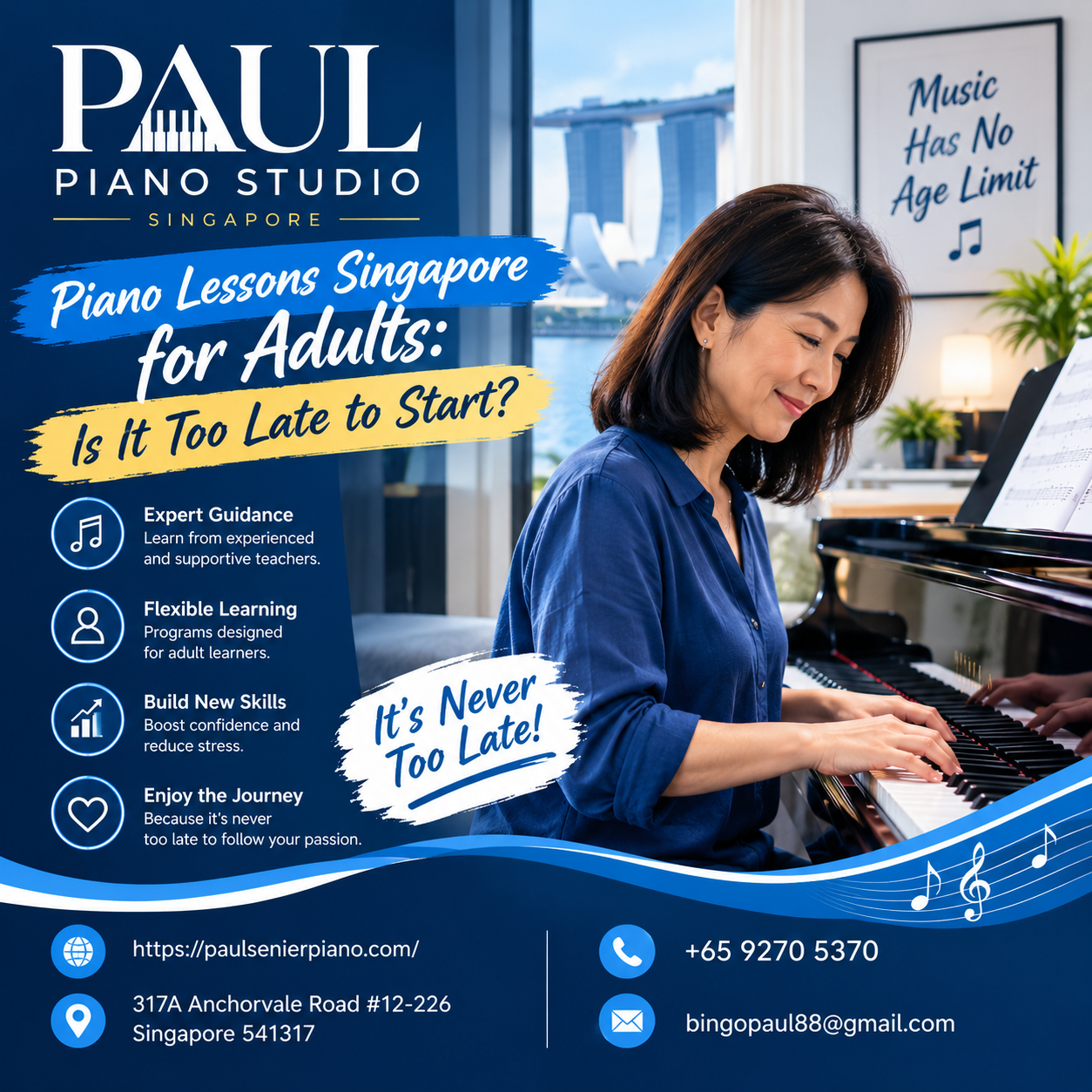
Have you always wanted to learn the piano but assumed you were too old to start? Perhaps you took lessons as a child and stopped years ago, or maybe you have never touched a piano before.
The good news is simple: it is never too late to start learning piano.
Today, many adults choose piano lessons for personal enjoyment, relaxation, creativity, or a structured hobby. Others want to learn their favourite songs, return to music after a long break, or eventually prepare for graded examinations. With the right teacher and realistic practice routine, adults can make meaningful progress at their own pace.
Is It Really Too Late to Learn Piano as an Adult?
No. Age does not prevent you from learning piano.
Adult learners often bring advantages that younger beginners may not have. They can understand instructions, recognise patterns, set their own goals, and make conscious decisions about how they want to learn.
Adult piano programs in Singapore commonly cater to both complete beginners and people returning to the instrument after years away. Lessons can also be adapted around different goals, from casual playing to examination preparation. The key is not your age. It is your motivation, consistency, and willingness to practise.
Why Are More Adults Choosing Piano Lessons in Singapore?
Adults have different reasons for starting piano. Some want a relaxing activity after work, while others have always dreamed of playing a particular piece.
Common reasons include:
- Learning a new skill
- Playing favourite songs
- Developing a creative hobby
- Improving musical knowledge
- Returning to an instrument learned during childhood
- Preparing for piano examinations
- Playing for family and friends
- Building confidence through performance
Unlike children, adults can usually decide exactly what they want from their lessons. This allows a piano tutor in Singapore to create a more personalised learning experience.
What Can Adults Expect from Their First Piano Lesson?
If you have never played before, your first lesson will usually focus on the fundamentals rather than complicated pieces.
A beginner may learn about:
- Piano keys and keyboard layout
- Correct posture
- Hand and finger position
- Basic note reading
- Rhythm
- Simple exercises
- Basic music terminology
- Playing short musical patterns
Your teacher may also ask about your goals.
For example, do you want to play classical music? Would you prefer pop songs? Are you interested in ABRSM examinations? Or do you simply want to learn for enjoyment?
Knowing your goals allows the teacher to design lessons around what motivates you.
Can Adults Learn Piano Without Any Musical Background?
Absolutely.
You do not need to know how to read music before starting. A good beginner program introduces music reading gradually alongside practical playing. Adults may initially feel overwhelmed by terms such as scales, chords, rhythm, dynamics, and notation. However, these concepts become easier when they are introduced step by step. The important thing is not to compare yourself with someone who has been playing for years. Your first goal should simply be to understand the basics and become comfortable at the keyboard.
How Long Does It Take to Learn Piano?
There is no fixed timeline because every learner is different.
Your progress may depend on:
- Previous musical experience
- Lesson frequency
- Practice consistency
- Learning goals
- Type of music you want to play
- Individual learning pace
A beginner who practises regularly may learn simple pieces relatively quickly, while developing advanced technique and musicianship takes considerably longer. The best approach is to set small, achievable milestones.
For example:
First stage: Learn basic notes, rhythm, posture, and simple pieces.
Second stage: Develop sight-reading, coordination, scales, and musical expression.
Third stage: Expand repertoire and technical ability.
Advanced stage: Work toward more challenging pieces, performances, or examinations if desired.
How Much Should an Adult Practise?
One of the biggest challenges for adult learners is finding time. Work, family responsibilities, commuting, and other commitments can make long practice sessions difficult. Fortunately, you do not necessarily need to spend hours at the piano every day.
A consistent and focused routine can be more useful than occasional long sessions.
Try dividing your practice into manageable sections:
- Warm up with a short technical exercise.
- Practise a difficult passage slowly.
- Work on your current piece.
- Spend a few minutes on sight-reading.
- Finish by playing something you enjoy.
If you only have a short amount of time on certain days, communicate this with your teacher. A good tutor can help you create realistic practice goals.
Should Adults Take Private Piano Lessons?
Private lessons can be particularly useful for adult beginners because the teacher can adjust the pace to suit the learner.
A one-to-one piano tutor Singapore program allows the teacher to immediately identify difficulties and provide individual feedback.
Private lessons can also be tailored to specific interests. For example, one adult may want classical repertoire, while another may prefer contemporary music.
The important thing is to find a teacher who understands adult learning rather than simply following the same approach used for young children.
What About ABRSM Piano Exams for Adults?
Adults can absolutely work toward graded piano examinations if they want a structured goal.
ABRSM preparation can involve repertoire, technical skills, sight-reading, aural development, and musical understanding. Some adult piano programs in Singapore specifically offer pathways for learners who want to prepare for ABRSM or other recognised examinations.
However, exams are optional.
If your goal is simply to relax after work and play your favourite songs, there is no reason to follow an examination pathway.
If you enjoy having measurable goals and working toward a qualification, an exam-based approach can provide useful structure.
Do I Need to Own a Piano?
Having regular access to a piano or suitable digital keyboard is helpful because practice is an important part of learning.
You do not necessarily have to purchase an expensive acoustic piano immediately.
A suitable digital piano can provide a practical starting point for many beginners, particularly if space is limited.
Before buying an instrument, ask your piano teacher in Singapore for advice about the type of keyboard or piano that would be appropriate for your level and goals.
How to Choose the Right Piano Classes in Singapore for Adults
Not every piano class will suit every adult learner.
Before enrolling, consider the following:
Teaching Style
Does the teacher explain concepts clearly and patiently?
Lesson Flexibility
Can lessons fit around your work and personal schedule?
Learning Goals
Can you learn the type of music you actually enjoy?
Lesson Format
Would you prefer private lessons, group classes, studio lessons, or home tuition?
Progress
Does the teacher provide clear feedback and achievable goals?
Examination Support
If you want to take ABRSM or another exam, does the teacher have experience preparing adult students?
Some adult piano programs in Singapore explicitly offer flexible lessons and personalised instruction for different goals.
Why the Right Teacher Makes a Difference
Learning piano as an adult should be challenging, but it should also be enjoyable.
The right teacher understands that adult students may have limited practice time, specific musical preferences, and different reasons for learning.
Paul Piano Studio, for example, can be considered by adult learners looking for a structured and supportive approach to developing their piano skills.
A good teacher should encourage progress without making the student feel pressured to move faster than they are ready for.
Common Mistakes Adult Beginners Should Avoid
Adult beginners sometimes make the learning process harder than necessary.
Trying to Learn Too Quickly
Wanting to play advanced pieces immediately is understandable, but strong fundamentals make future progress easier.
Skipping Practice
Inconsistent practice can make each lesson feel like starting again.
Comparing Yourself With Others
Everyone learns at a different pace. Focus on your own improvement.
Focusing Only on Correct Notes
Technique matters, but rhythm, dynamics, phrasing, and musical expression are equally important.
Choosing Lessons Only by Price
The cheapest lesson is not necessarily the best value. Consider the teacher’s experience, teaching style, flexibility, and ability to meet your goals.
Is Learning Piano as an Adult Worth It?
For many adults, the answer is yes.
Learning piano can provide a creative activity that fits into your personal routine. It can also give you a sense of achievement as you move from learning your first notes to playing complete pieces. You do not have to become a concert pianist. You do not have to take examinations. You do not even have to follow a formal syllabus.
Your goal might simply be to sit down at the piano after a long day and play music you enjoy.
That is a perfectly worthwhile reason to learn.
Paul Piano Studio is one option adults can explore when comparing piano learning opportunities in Singapore and looking for lessons that can support their individual musical goals.
Final Thoughts
If you have been asking yourself, “Am I too old to start piano lessons?”, the answer is no.
Whether you are 20, 40, 60, or beyond, you can begin learning piano with the right guidance and a realistic practice routine.
The most important step is simply to start.
Choose a teacher who understands your goals, begin with manageable lessons, practise consistently, and give yourself time to develop.
You may be surprised by how much you can achieve once you stop worrying about whether it is too late and start enjoying the learning process.
Frequently Asked Questions
1. Is it too late to start piano lessons as an adult?
No. Adults can start piano at any age, even without previous musical experience. Lessons can be adapted to your ability, schedule, and personal goals.
2. Can I learn piano as an adult with no music experience?
Yes. Beginner lessons can introduce you gradually to keyboard layout, rhythm, music reading, technique, and simple pieces.
3. How often should adults take piano lessons?
Weekly lessons are a practical option for many adults because they provide regular guidance while leaving time for practice between sessions.
4. How much should an adult beginner practise piano?
There is no universal amount. Consistent, focused practice is more important than occasional long sessions. Your teacher can recommend a routine based on your goals and schedule.
5. Can adults take ABRSM piano examinations?
Yes. Adults can prepare for graded examinations if they want a structured musical goal. The appropriate grade and preparation timeline depend on the student’s current ability.